A question to a helpful person can resolve many record problems. You may need a code explained, a copy of a document or confirmation that a request was received. A formal benefit claim or appeal is different: it may require a particular procedure, destination, supporting information and deadline. The existence of a friendly conversation does not tell you which process is underway.
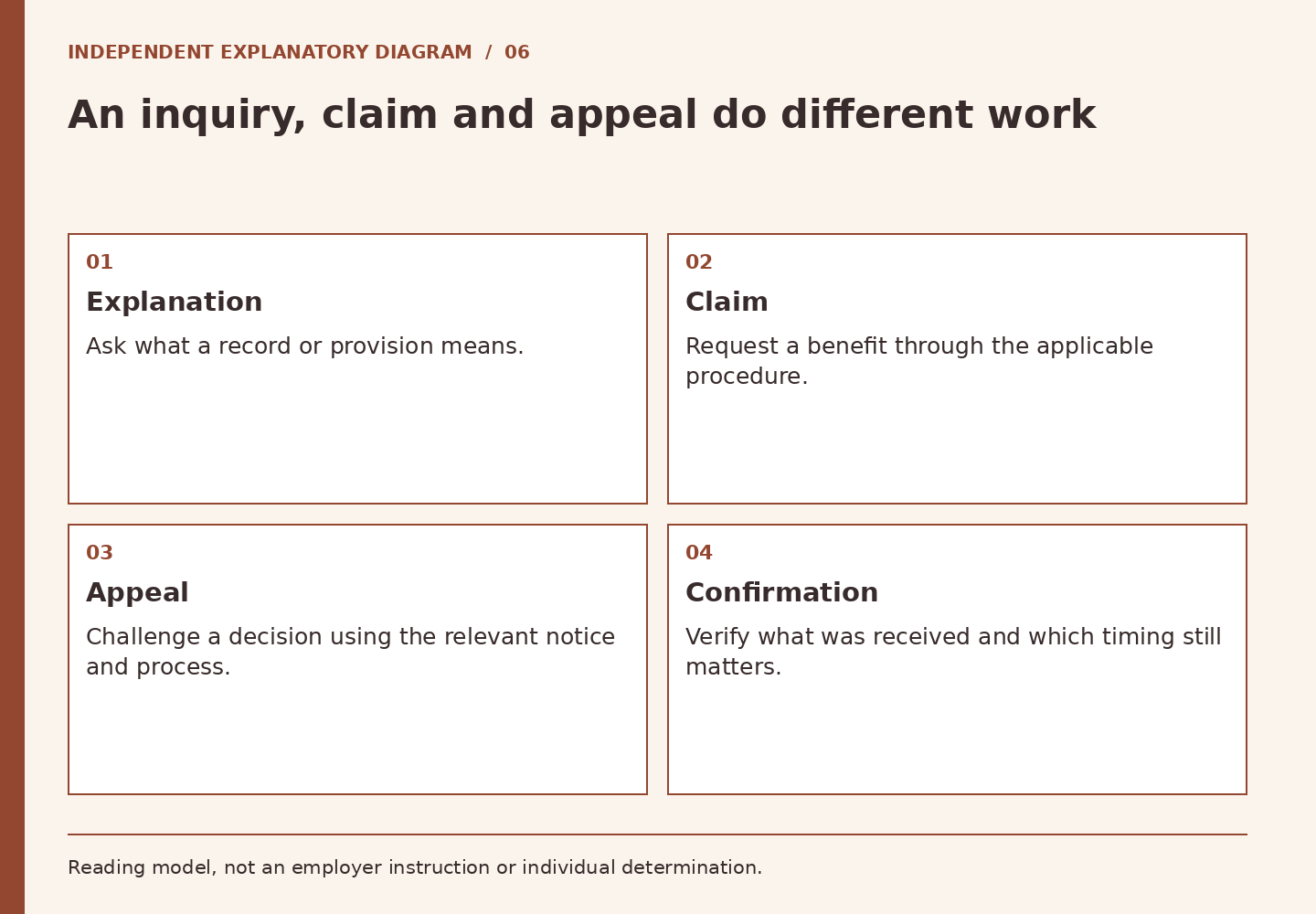
This article helps a worker recognize that procedural distinction. It does not assess the merits of a Nordstrom benefit claim, draft a legal appeal or decide which law applies to an individual program. No private claim, denial notice or plan procedure was reviewed for this publication. Use the actual notice and current official instructions for your case.
Start with the result you are asking for
“Please explain this deduction” asks for information about a record. “Please provide the applicable plan document” asks for a document. “I am requesting the benefit described in this plan” may raise a claim-procedure question. “I disagree with this denial” may raise an appeal question. The exact classification depends on the facts and applicable process; the wording here is illustrative, not a set of legal trigger phrases.
Write the desired result in plain language. That makes it easier to ask the receiving service whether your message is in the correct process. If you have received a formal notice, do not replace its instructions with a general employer contact route merely because that route is familiar or quicker to reach.
Read a notice for its procedural information
Look for what was decided, the reasons stated, the plan provision identified, what further information is requested, where a response belongs and what timing instructions apply. Also identify the date of the notice and when you received it. If something is unclear, ask promptly for an explanation through the verified route, preserving a copy of your request.
The EBSA health-claims booklet describes procedures for many private-sector employment health plans, with exceptions. It explains the role of plan procedures and denial notices in pursuing an appeal. Its general framework is not a substitute for determining the applicable process and timing for a particular notice.
Do not assume an inquiry pauses a deadline
In a fictional example, an employee receives an adverse benefit notice and sends a manager a request to “look into it.” The manager forwards the concern but does not confirm that an appeal was filed through the plan’s procedure. The employee now has two separate facts: an informal request exists, and the formal filing status is unknown.
The safer next step is to clarify the required procedure immediately, using the actual notice or plan administrator. Ask what counts as a submitted claim or appeal and how receipt can be confirmed. Do not wait for the informal conversation to finish if doing so could jeopardize a deadline. This article deliberately does not calculate one deadline for all kinds of benefit issue.
Prepare a relevant record, not an indiscriminate bundle
Identify the decision under review, the specific point you believe needs correction, the records that support that point and any information the procedure requests. Keep an index of what you submit and when. If a service requests more information, establish the secure destination before transmitting private medical, financial or identifying records.
A broader narrative can feel persuasive while making the actual issue harder to find. For example, if the notice says a required item was not received, first establish what was sent, through which route and whether receipt was acknowledged. That does not prove the benefit must be approved. It identifies the factual discrepancy that the reviewer needs to address.
Seek help at the appropriate level
The DOL plan-information page explains the role of descriptions and related disclosures for covered plans. The official Ask EBSA service is a route for employee-benefit questions. Qualified legal assistance may be appropriate for consequential disputes or uncertain deadlines. No agency outcome or remedy is promised by an editorial link.
When care is urgent, do not rely on an ordinary correspondence sequence from this article. Use the plan’s current urgent-care or expedited-review instructions where applicable and seek appropriate medical help. Likewise, an unrelated payroll problem may need a wage or payroll process rather than a health-plan appeal; identify the actual obligation at issue.
A good finish is not merely a sent message. It is knowing what process you used, what was received, what response is expected and which deadline remains relevant. Preserve that sequence using the personal archive method. A useful conversation should support the required procedure, not accidentally replace it.
Sources and reading boundaries
Sources checked October 7, 2026. This is a review date, not a policy effective date or an account test.
- EBSA: Filing a Claim for Your Health Benefits: General private-sector ERISA health-claim procedures, denial notices and appeals; exceptions and deadlines require current plan-specific review. Review basis: Official source text reviewed through search-index retrieval.
- U.S. Department of Labor: Plan Information: General ERISA plan disclosure roles, including SPD, modifications and SBC. Not a ruling about a particular program or individual. Review basis: Official public page opened and reviewed.
- U.S. DOL: Ask EBSA: Verified official employee-benefit assistance intake destination; no submission or agency outcome is claimed. Review basis: Official source text reviewed through search-index retrieval.