The most useful question about a pay statement is often narrower than “Why is my paycheck different?” A changed total can reflect a changed period, rate, quantity of work, earnings category, deduction or correction. Reviewing those components gives payroll something specific to investigate and gives you a better way to understand the answer. It does not require putting the statement into a public calculator.
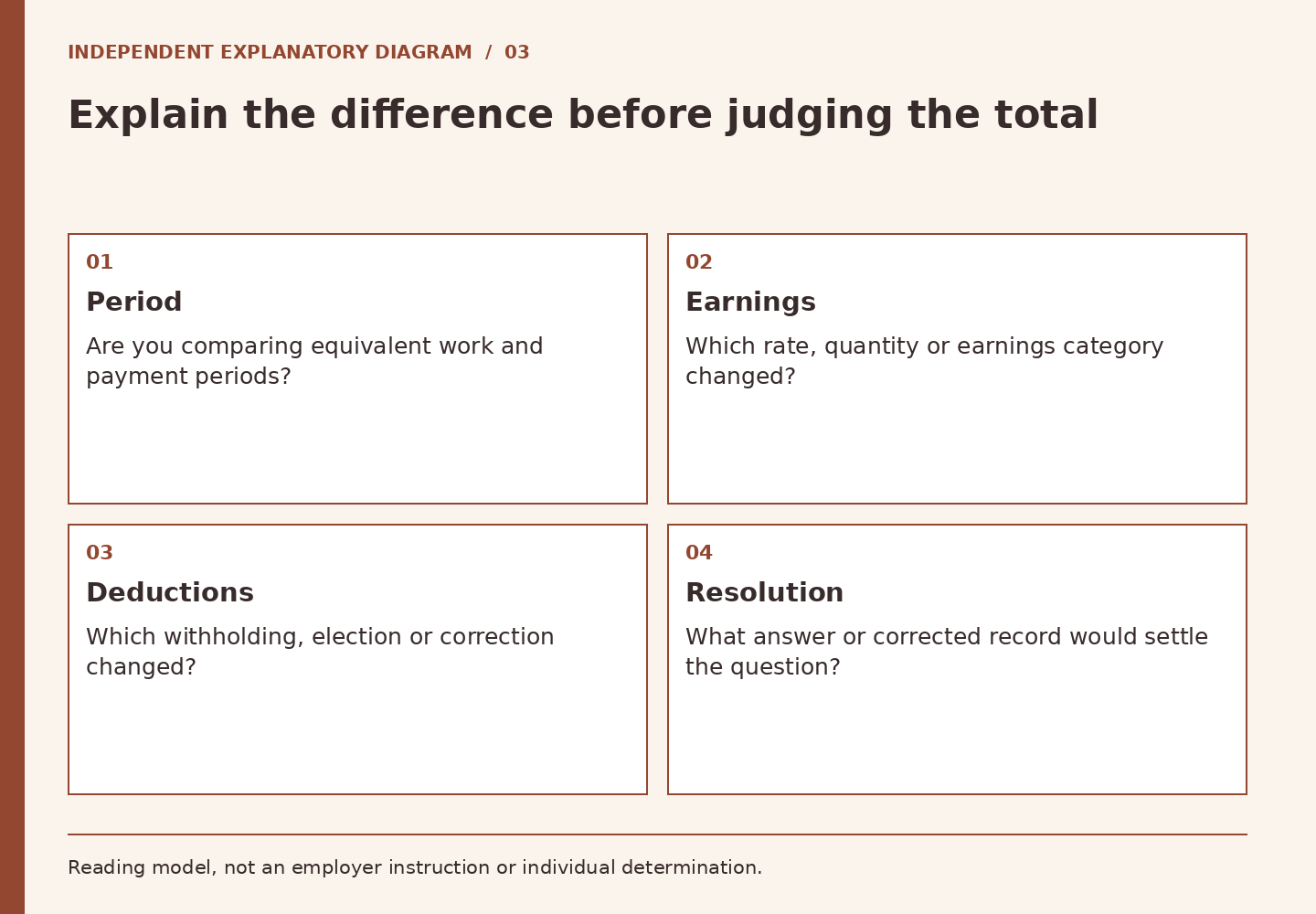
This is an independent reading method for employees considering or working in Nordstrom’s varied roles. It is not a reproduction of the company’s pay-statement layout. No private payroll screen was inspected, and the labels on your actual statement may differ from the descriptive categories used here.
Start with the period, not the deposit
Place the statement’s work or earnings period beside its pay date. Then check whether the comparison statement covers an equivalent period. A first payment, adjustment payment or payment around a leave may not be directly comparable with a routine statement. Ask what each date means if the layout is unclear rather than assuming the issue date is the date all the work occurred.
The amount reaching an account is a result. It does not display every component that produced it. If a statement reflects more than one payment destination, a reimbursement or another separately identified item, ask payroll to explain that arrangement before using one deposit as the only reference. This article does not supply account troubleshooting or recommend a payment method.
Identify the changed input
Read earnings categories first. Look for the stated rate where applicable, the number of units or hours, and separately described amounts such as overtime, leave pay, commission or an adjustment if they appear. Compare the same category across the same kind of period. Do not treat every amount on a statement as wages, or every unfamiliar abbreviation as an error, without checking its meaning.
Next read deductions and withholding. Ask whether the changed line is tied to an election, a coverage period, tax treatment or a correction. The IRS tax-withholding overview is a general reference for federal withholding categories. It cannot explain every employer code, state item or personal tax outcome. Avoid replacing an unexplained code with an interpretation from an unrelated employer’s sample statement.
Work one difference all the way through
In an original fictional example, two gross totals are similar, but take-home pay is lower on the second statement. The employee notices a newly appearing benefit deduction and asks which election and coverage period it represents. The answer might establish that the deduction matches a confirmed election, or it might reveal an unresolved mismatch. Merely noticing the line does not establish either outcome.
Another fictional comparison shows the same deduction pattern but fewer recorded work hours. That requires a different inquiry. Asking the benefits team to explain the net total would send the issue toward the wrong record. Use a time-entry reconstruction when the changed input is time, and retain the distinction between the employer’s statement and your own account of work performed.
Ask for a correction you can verify
A clear request identifies the statement date, the exact line, what you expected from which record, and the explanation or correction you seek. For example: “The statement for this period shows a different rate from the written change notice. Which effective date did payroll use?” Use the actual details only through the employer’s approved private route.
If someone says a correction will appear later, ask how you can identify it and which original period it concerns. When the later record arrives, compare the relevant component rather than assuming an increased net payment proves everything was corrected. Preserve both the original and corrected records with a brief note connecting them. Do not alter the original file to make your working copy look resolved.
Know the limits of the review
The DOL recordkeeping fact sheet concerns covered employer duties; it does not establish one universal statement format. Questions about wage entitlement, due dates or legal compliance may require a labor authority or qualified adviser. Federal withholding estimates, when appropriate, belong in an official resource such as the IRS estimator, using its current instructions.
The practical finish is a difference you can explain, a correction you can verify, or a clearly unresolved issue with an identified next step. Save only the relevant personal records in your own secure archive. This publication cannot inspect the underlying payroll calculation, validate tax liability or resolve a personal dispute.
Sources and reading boundaries
Sources checked October 7, 2026. This is a review date, not a policy effective date or an account test.
- U.S. DOL: Fact Sheet 21, Recordkeeping: Covered employers must retain specified wage and hour records. Does not establish a universal employee pay-stub format or employee retention period. Review basis: Official source text reviewed through search-index retrieval; direct navigation was not relied upon.
- IRS: Tax withholding: General distinction among federal income-tax withholding and Social Security/Medicare taxes; no personal withholding calculation. Review basis: Official source text reviewed through search-index retrieval.
- IRS: Tax Withholding Estimator: Official federal withholding-estimate resource; preparation requires current information and its own eligibility guidance. No endorsement of a specific election. Review basis: Official source text reviewed through search-index retrieval.